Let your passengers hear what's beneath the surface
Burns hydrophones are used by dolphin and whale watching operators across Australia and around the world, bringing the sounds of cetaceans to life — live, on the water.
Why operators choose Burns
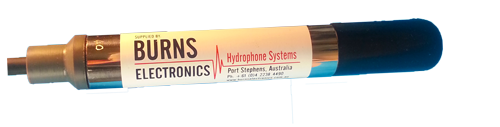
Most hydrophone systems are designed for researchers. Ours work just as well on a working tourist vessel: lower it over the side, and your passengers hear whale song through the boat's PA.
No setup complexity
Works with any standard audio input — PA systems, powered speakers, recorders or headphones. Nothing to configure between trips.
Built for the sea
Waterproof and pressure-rated to 100 m. Handles salt water, rough conditions and daily deployment through a full season.
Captures the cetacean range
The CR30-40 covers 7 Hz – 30 kHz — baleen whale song at the bottom, dolphin whistles and clicks at the top, with nothing important falling outside it.
Australian-made since 1998
Designed and built in Nelson Bay, in the middle of an active cetacean habitat. Direct support from the people who made it — no offshore middlemen.
How it works on your vessel
Three steps, and no technical expertise required.
Lower it over the side
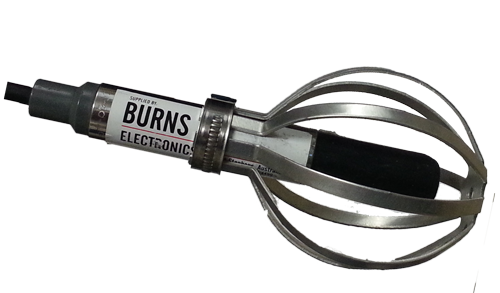
Drop the hydrophone 5–10 metres. A simple cleat or clamp on the rail is all you need — no special mounting hardware.
Plug into your audio system
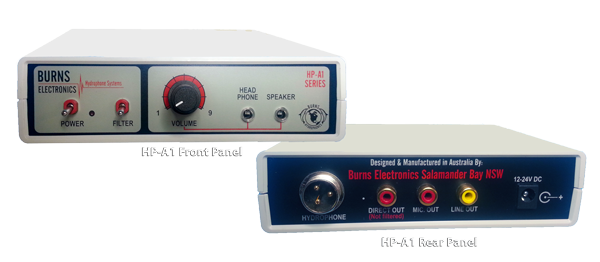
The HP-A1 powers the hydrophone and conditions the signal, then feeds your PA, a powered speaker or a recorder over RCA or BNC.
Your passengers hear it live
When whales or dolphins are nearby the audio is immediate and striking. Many operators describe it as the highlight of the tour.
Common questions from operators
What audio output does the hydrophone produce?
The HP-A1 output is either RCA or BNC (depending on configuration). A BNC connects directly to any PA input, mixer, or powered speaker.
How deep can it go?
The AquaEar is rated to 100 metres — far beyond what any tourist vessel needs. Most operators drop 5–10 m below the surface.
Do I need the amplifier?
If your PA has a microphone or line input, the HP-A1 powers the hydrophone and conditions the signal for your PA or recording device. Contact us if you're unsure — we'll help you choose the right setup.
Can I record the audio for playback?
Yes. Any device with an audio input — phones, recorders, laptops — can capture the signal. Many operators record encounters to share on social media.
Not sure what you need?
Tell us about your vessel and existing audio setup and we'll recommend the simplest configuration that works.
Get in touch